 Save
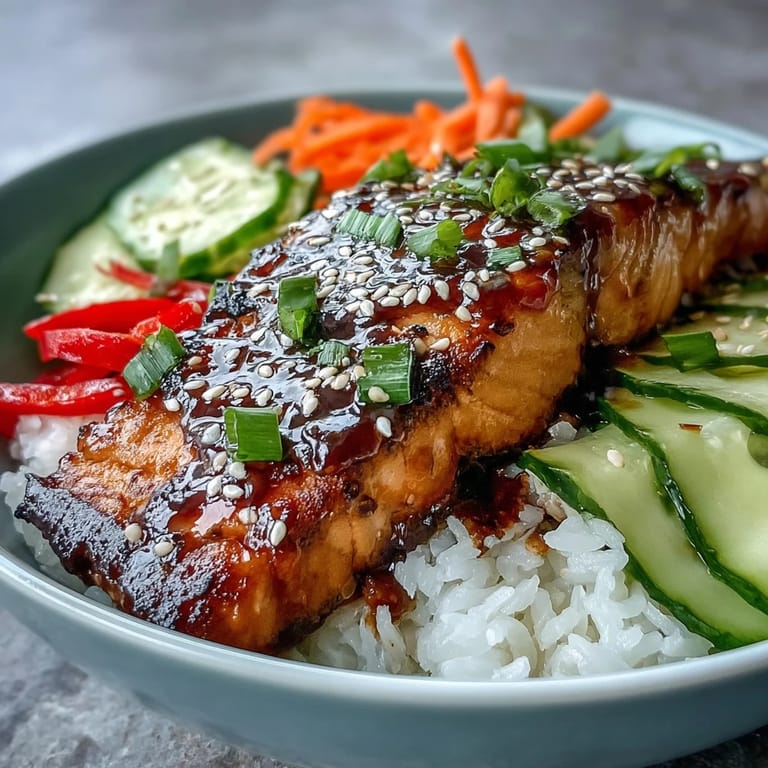
Save One Tuesday night, my partner came home talking about a salmon bowl they'd grabbed from a pop-up restaurant, and I found myself trying to recreate it the next evening. The kitchen filled with the smell of ginger and soy as I whisked together that glossy glaze, and I realized how simple it could be to make something that tastes like you ordered it. This bowl became my go-to when I wanted to feel like I'd actually cooked something impressive without spending hours at the stove.
I made this for my friend who was going through a wellness kick, and watching her face light up when she realized it was actually good food and not some depressing diet meal was worth every julienne cut. She started making it twice a week after that, and now sends me photos of her variations.
Ingredients
- Salmon fillets (150 g each): Look for ones with a vibrant pink color and firm flesh; they should smell like the ocean, not fishy, and the skin should feel slightly slick but not slimy.
- Soy sauce: This is your flavor backbone, so don't skip it, though tamari works beautifully if you need gluten-free.
- Honey: It balances the salt and creates that glossy finish that makes the glaze cling to the salmon.
- Fresh ginger, grated: Microplane it if you have one; it distributes more evenly than mincing and tastes brighter.
- Garlic, minced: Fresh is non-negotiable here because garlic is doing real work in that glaze.
- Rice vinegar: The acidity cuts through richness and keeps everything from tasting one-note.
- Sesame oil: A little goes a long way; it's your secret depth.
- Jasmine or sushi rice: Jasmine rice has this subtle floral note that pairs perfectly with the bowl's flavors.
- Vegetables (carrot, cucumber, bell pepper): Keep them cold and crisp by storing them in ice water after cutting.
- Edamame: Buy them already shelled and cooked to save yourself fifteen minutes of fidgeting.
- Toasted sesame seeds: The toasted version has exponentially more flavor than raw.
- Scallions: The green parts especially should go on just before eating so they stay perky.
Tired of Takeout? 🥡
Get 10 meals you can make faster than delivery arrives. Seriously.
One email. No spam. Unsubscribe anytime.
Instructions
- Start your rice while everything else waits:
- Rinse the rice under cold running water, stirring gently with your fingers until the water runs almost clear; this removes excess starch and helps each grain stay separate. Bring rice and water to a boil, then drop the heat low, cover it, and let it sit for fifteen minutes before removing from heat and letting it rest covered for another ten.
- Whisk together your glaze:
- In a small bowl, combine soy sauce, honey, grated ginger, minced garlic, rice vinegar, and sesame oil, stirring until the honey dissolves completely. If you want a thicker, more clingy glaze that'll coat the salmon like lacquer, whisk cornstarch into one tablespoon of water and stir it in.
- Prepare your oven and salmon:
- Get your oven heating to 200°C (400°F) and line a baking sheet with parchment paper. Pat your salmon fillets dry with paper towels because moisture is the enemy of crispy skin, then brush them generously with the glaze, reserving what's left in the bowl.
- Bake the salmon until it flakes:
- Pop the salmon in the oven for twelve to fourteen minutes; it's done when the flesh flakes apart easily with a fork and the edges have started to caramelize. While that's happening, pour your remaining glaze into a small saucepan and bring it to a gentle simmer over medium heat, stirring occasionally until it thickens and coats the back of a spoon.
- Cut your vegetables into elegant julienne:
- Use a sharp knife or mandoline to slice your carrots, cucumber, and bell pepper into thin, matchstick-like pieces. The uniformity isn't just pretty; it makes everything cook evenly if you ever decide to add heat to the bowl.
- Assemble your bowls:
- Divide the fluffy rice among four bowls, then nestle a salmon fillet in the center of each and arrange your vegetables and edamame in little piles around it. Drizzle the reduced glaze over everything, then scatter sesame seeds and sliced scallions on top, finishing with a lime wedge if you want that final brightness.
 Save
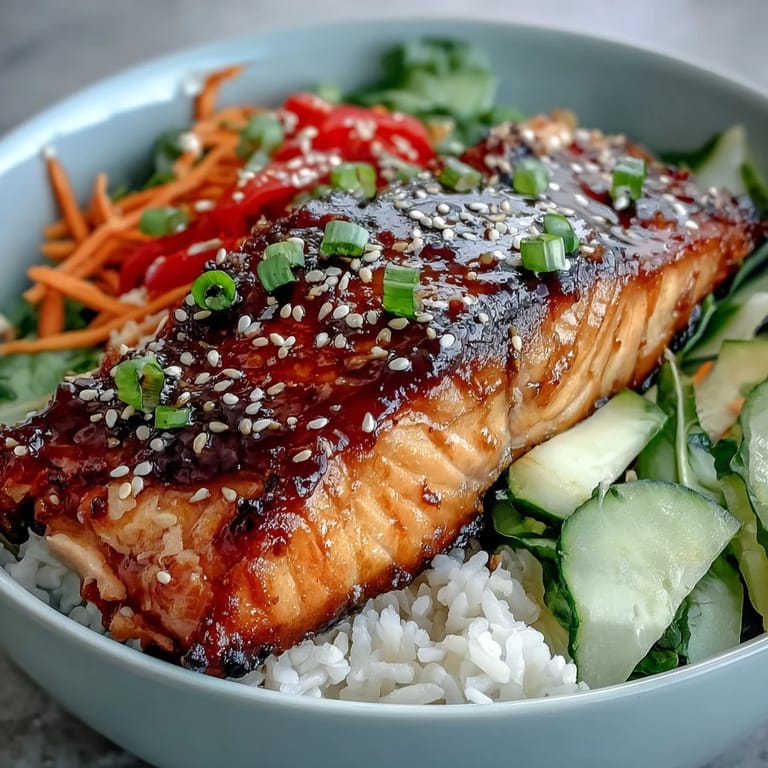
Save My mom tried this bowl on a random Sunday afternoon and suddenly started asking me to teach her how to make it, which was how I knew it had crossed from "good dinner" into "something she'd make for her friends." There's something about sitting down to a bowl this colorful and put-together that makes you feel like you're taking care of yourself without it feeling like work.
The Glaze Is Everything
This glaze is the difference between a mediocre salmon bowl and one you'll crave. The balance of sweet, salty, and acidic is what makes your brain want to take another bite, and the fact that it takes two minutes to make feels like cheating. I learned this after my first attempt where I forgot the honey and ended up with something aggressively salty that no amount of lime could fix.
Vegetables Should Stay Crisp
The moment vegetables touch warm rice, they start to soften and lose their textural contrast, which is half the appeal of this bowl. I've found that keeping them separated, either by arranging them in distinct sections or storing them in a container with paper towels until serving, keeps them snappy and fresh. If you're prepping ahead, store everything in the fridge and only assemble right before eating.
Make It Your Own
This bowl is flexible enough to become whatever your kitchen has on hand, whether that's avocado slices, pickled ginger, or crispy fried shallots. I've added everything from a soft-boiled egg to cashews depending on my mood and what needed using up. The rice and glaze are non-negotiable, but everything else is fair game for swapping and experimenting.
- Substitute quinoa or brown rice if you want more protein or prefer whole grains.
- Tamari replaces soy sauce seamlessly for anyone watching their gluten intake.
- Fresh mint, cilantro, or microgreens scattered on top at the last second add brightness and surprise.
 Save
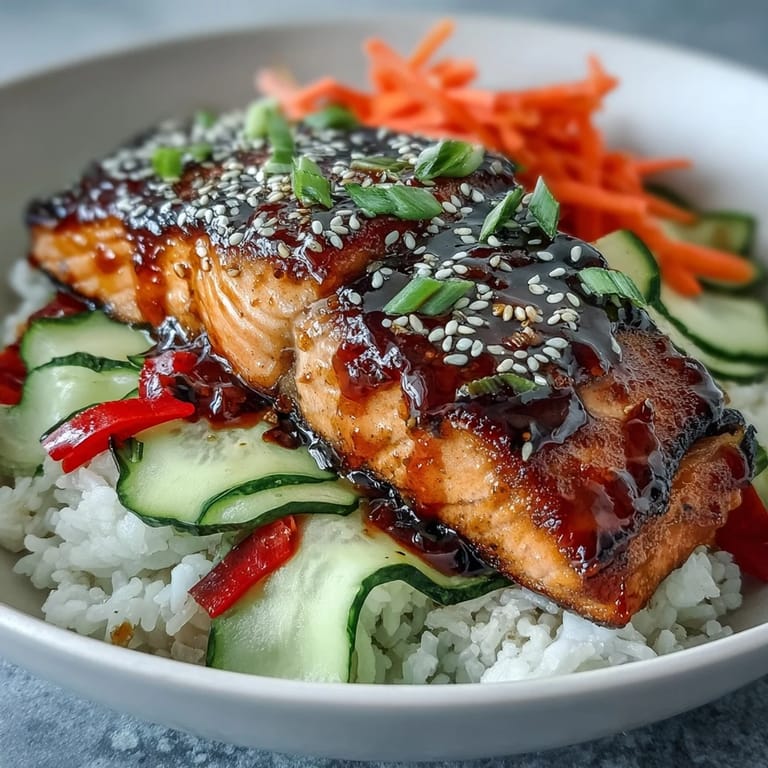
Save This bowl taught me that you don't need complicated techniques or obscure ingredients to make food that feels special. It's become my answer to the question of what's for dinner, and I think it'll become yours too.
Questions & Answers
- → Can I use frozen salmon fillets?
Yes, thaw frozen salmon completely in the refrigerator before glazing and baking. Pat dry with paper towels to ensure the glaze adheres properly.
- → What vegetables work best in this bowl?
Julienned carrots, cucumber, and red bell pepper provide excellent crunch and color. You can also add shredded cabbage, snap peas, or spinach for variety.
- → How do I store leftovers?
Store components separately in airtight containers in the refrigerator for up to 2 days. Reheat salmon gently and assemble fresh bowls for best texture.
- → Can I make this gluten-free?
Substitute regular soy sauce with tamari or coconut aminos. Ensure all other ingredients, including the rice vinegar, are certified gluten-free.
- → What's the best way to julienne vegetables?
Cut vegetables into matchstick-sized pieces about 2-3 inches long. A sharp knife or mandoline slicer helps achieve uniform, thin strips for even texture.
- → Can I grill the salmon instead?
Absolutely. Grill salmon over medium-high heat for 4-5 minutes per side, brushing with glaze during cooking. The smoky char complements the Asian flavors beautifully.