 Save
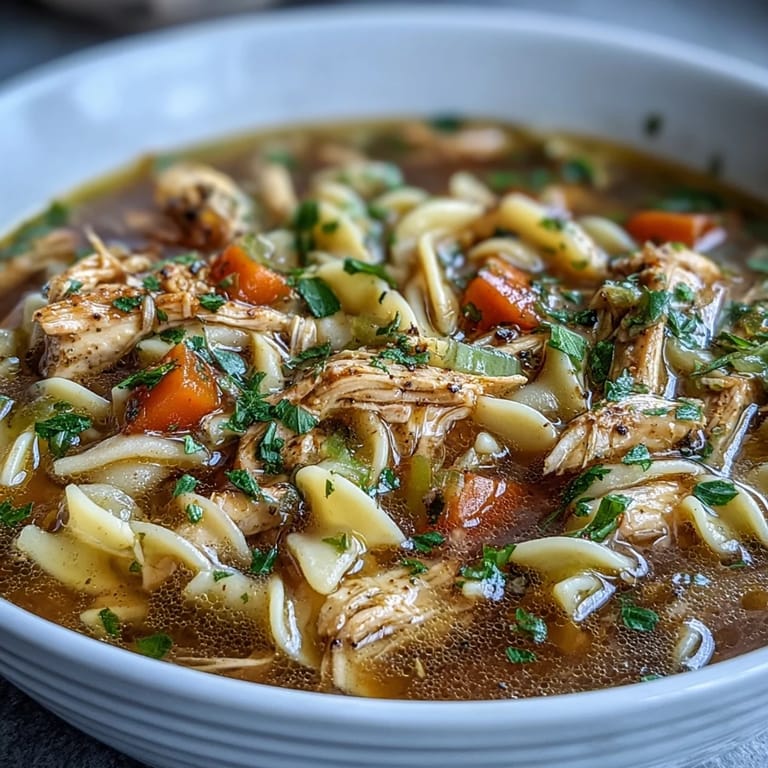
Save There's something about the hiss of the Instant Pot that signals comfort is on the way. My weeknight repertoire changed the moment I realized I could have a proper chicken noodle soup ready in half an hour, without the usual hours of simmering. The first time I made this, I was skeptical that pressure cooking could deliver that deep, homey flavor, but the moment I lifted that lid and caught the aroma of thyme and tender chicken, I understood why this method has become my go-to on busy evenings.
I made this for my neighbor when she wasn't feeling well, and she called me the next day just to ask if I'd make it again for her family dinner. That's when I realized this soup had crossed over from being just convenient into genuine comfort food territory. Watching her kids ask for seconds, and her husband quietly finishing his bowl while reading the paper—those small moments stick with you.
Ingredients
- Boneless, skinless chicken breasts or thighs (1 lb): Thighs stay more tender under pressure, but breasts work fine if that's what you have; the key is not overcooking, which the Instant Pot helps prevent.
- Medium onion, diced (1): This is your flavor foundation, so don't skip it even if you're in a rush.
- Medium carrots, peeled and sliced (3): Slicing rather than chopping keeps them visible in the bowl and lets them soften evenly.
- Celery stalks, sliced (3): The holy trinity of soffritto wouldn't be complete without celery's subtle earthiness.
- Garlic cloves, minced (3): Adding it after the other vegetables prevents it from burning during the sauté phase.
- Low-sodium chicken broth (8 cups): Low-sodium gives you control over the final salt level, and trust me, you'll want that control.
- Dried thyme (1 tsp): This herb is the quiet backbone of the whole soup; dried works wonderfully in the Instant Pot.
- Dried parsley (1 tsp): It adds a gentle herbal note that balances the richness of the chicken.
- Bay leaf (1): Remove it before serving—I learned this the hard way when my sister bit into one and gave me a look I'll never forget.
- Black pepper (1/2 tsp): Freshly ground if possible, though any pepper works in a pinch.
- Salt (1 tsp): Taste as you go; you might need a touch more depending on your broth.
- Egg noodles (6 oz): Don't add these until after pressure cooking, or they'll turn into mush.
- Fresh parsley, chopped (2 tbsp optional): A sprinkle at the end catches the light and reminds you that good food can look as inviting as it tastes.
- Olive oil (1 tbsp): The sauté step needs just enough oil to coat the vegetables without making the soup heavy.
Tired of Takeout? 🥡
Get 10 meals you can make faster than delivery arrives. Seriously.
One email. No spam. Unsubscribe anytime.
Instructions
- Start with the sauté:
- Switch your Instant Pot to Sauté mode and let it warm for a minute, then add the oil. Toss in your onion, carrots, and celery, stirring occasionally until the edges of the vegetables turn golden and the kitchen fills with that unmistakable vegetable-cooking smell—about 3 to 4 minutes.
- Wake up the garlic:
- Add your minced garlic and stir constantly for just 30 seconds; you want that pungent raw edge to disappear, not for the garlic to brown.
- Nestle the chicken:
- Lay the chicken pieces right on top of the vegetables in a single layer. This positioning helps them cook evenly and stay moist.
- Add the broth and seasoning:
- Pour in all 8 cups of chicken broth, then sprinkle in the thyme, dried parsley, bay leaf, black pepper, and salt. Give everything a gentle stir to distribute the seasonings evenly.
- Seal and pressurize:
- Lock the lid securely, make sure the pressure valve is set to Sealing, and hit the High Pressure button for 10 minutes. The Instant Pot will take a few minutes to come to pressure—listen for the quiet hiss when it does.
- Release pressure carefully:
- When the timer beeps, let the pressure release naturally for 5 minutes, then switch the valve to Venting to release any remaining steam. Use a long spoon or towel to stay back from the steam.
- Shred the chicken:
- Remove the chicken pieces to a clean plate and use two forks to pull the meat apart into bite-sized shreds. It should tear apart easily if it cooked properly.
- Cook the noodles:
- Switch the Instant Pot back to Sauté mode, add the egg noodles directly to the hot broth, and let them simmer for 5 to 6 minutes, stirring occasionally so they don't stick together. They'll absorb the broth as they soften.
- Bring it together:
- Return the shredded chicken to the pot, stir everything to combine, and taste the soup. This is your moment to adjust the salt or pepper if needed.
- Finish and serve:
- Fish out the bay leaf with a spoon, ladle the soup into bowls, and top each one with a small handful of fresh parsley if you have it. Serve while the steam is still rising.
 Save
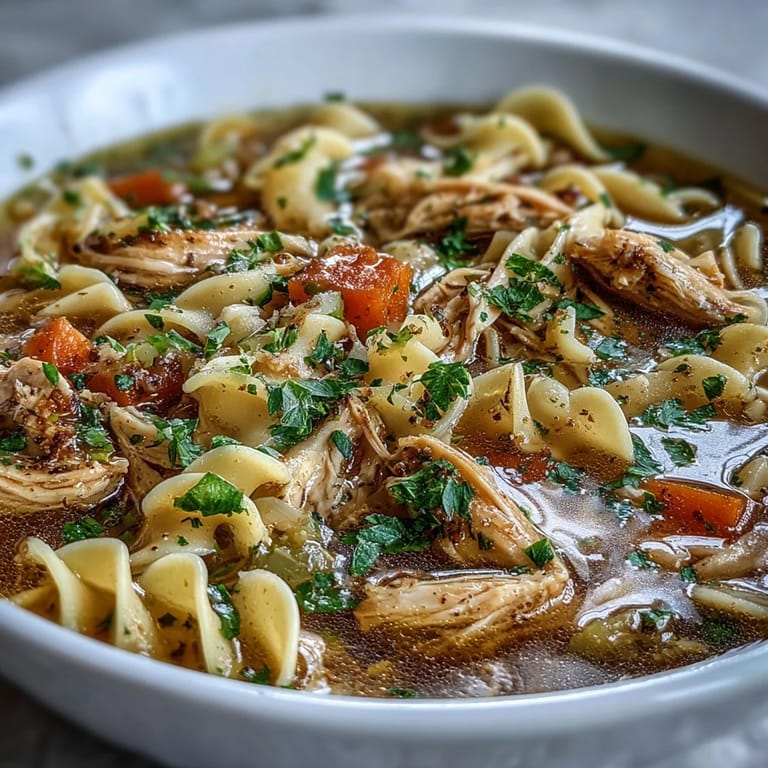
Save One winter evening, my partner came home to find this soup simmering, and he actually sat down and started talking about his day before asking how mine was. Food doesn't always heal things, but sometimes it creates the space where connection can happen. That's what this soup does for me now.
When Weeknight Cooking Feels Like Self-Care
There's a particular kind of satisfaction in pressing a button and walking away, knowing that dinner will be ready when you get back to the kitchen. The Instant Pot removes the anxiety of keeping a flame at the right temperature or worrying that you've forgotten about something simmering on the stove. What starts as pure convenience becomes something more—a small ritual of taking care of yourself and whoever sits at your table.
The Magic of Pressure Cooking Chicken
Pressure cooking sounds intimidating until you realize it's actually gentler on chicken than boiling would be. The sealed environment and consistent heat cook the meat through evenly without the drying that can happen with prolonged exposure to rolling water. I've found that chicken thighs handle the pressure even better than breasts, staying juicier and more forgiving if you happen to cook them an extra minute.
Variations and Customizations
Once you understand the basic structure of this soup, it becomes endlessly adaptable to whatever is in your kitchen or your mood on any given day. I've added spinach at the very end just to wilt it in the residual heat, or swapped the noodles for small pasta shapes or even rice. The bones of the recipe stay the same, which is why it's become such a reliable foundation.
- A squeeze of fresh lemon juice at the end adds brightness that feels almost surprising in its effect.
- Rotisserie chicken can replace the raw chicken breasts; just add it with the noodles to avoid shredding and reduce the initial cooking time.
- Gluten-free noodles swap in seamlessly if you need them, though they may cook a minute or two faster than traditional egg noodles.
 Save
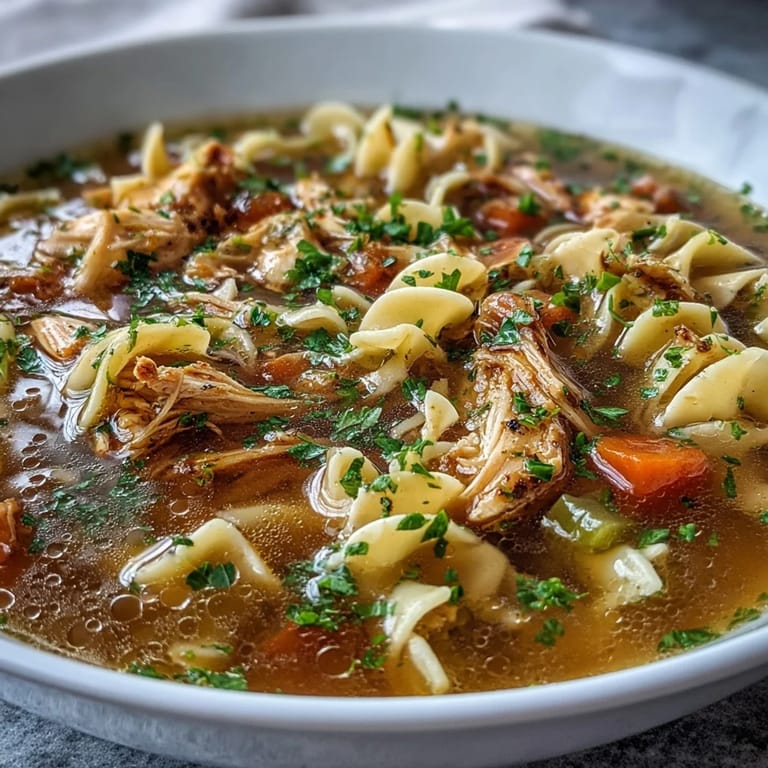
Save This soup has quietly become my answer to almost everything—a rough day, a sick friend, a Monday night when I can't think of what to make. There's something deeply right about ladling something warm and nourishing into a bowl and knowing it took barely any effort at all.
Questions & Answers
- → Can I use frozen chicken breasts?
Yes, you can use frozen chicken breasts. Increase the pressure cooking time to 12-15 minutes to ensure the chicken cooks through completely.
- → What type of noodles work best?
Traditional egg noodles are ideal, but you can substitute with any pasta shape you prefer. For gluten-free options, use rice noodles or gluten-free pasta.
- → How do I store leftovers?
Store in an airtight container in the refrigerator for up to 4 days. Note that noodles will absorb liquid over time, so you may need to add extra broth when reheating.
- → Can I add other vegetables?
Absolutely! Try adding peas, corn, green beans, or spinach. Add heartier vegetables at the beginning with the carrots, and delicate greens at the end with the noodles.
- → Why does my soup look watery?
If the broth seems thin, let it simmer uncovered on Sauté mode for a few extra minutes to reduce and concentrate the flavors. You can also add a cornstarch slurry for thickness.
- → Can I make this ahead of time?
Yes, but cook the noodles separately and store them apart from the soup. Add the noodles when reheating to prevent them from becoming mushy.