 Save
Save Last Tuesday, my colleague brought one of these bowls to our lunch meeting and somehow turned our entire afternoon around—the kitchen had been chaos that morning, but watching her eat something this bright and balanced made everyone pause. That's when I realized how powerful a bowl like this could be: no fuss, no apologies, just good fish, warm rice, and vegetables arranged like they actually want to be eaten together. I started making them the same week, and now they're my go-to answer when I need dinner to feel intentional without requiring hours of prep.
I made this for my sister after she mentioned feeling tired all the time, and she ate the whole thing in silence—the good kind of silence, where you're just present with your food. When she asked for the recipe, I knew I'd found something that bridges that gap between feeding yourself and actually caring about what you eat. That's the moment this stopped being a recipe and became something I wanted to share.
Ingredients
- Salmon fillet (500 g, cut into 2 cm cubes): Buy it from a fishmonger if you can—they'll cut it properly and you'll taste the difference, plus it's fresher than pre-cut packages that have been sitting under lights.
- Soy sauce (2 tbsp) or tamari for gluten-free: This is your umami anchor, so don't skip it or substitute with something lighter; it's what makes the marinade actually taste like something.
- Sesame oil (1 tbsp): A little goes a long way—too much and your bowl tastes medicinal, but the right amount adds warmth and a subtle nuttiness that elevates everything around it.
- Honey or maple syrup (1 tbsp): This balances the salt and soy, creating a glaze that caramelizes slightly on the salmon edges during broiling.
- Fresh ginger (1 tsp grated): Grate it fresh right before mixing—the bite and aroma are completely different from ground ginger, and it makes the marinade smell like something worth eating.
- Garlic (1 minced clove): One clove is enough; this isn't a garlic showcase, just a supporting note that says 'this is intentional.'
- Jasmine or sushi rice (2 cups uncooked): Jasmine rice is slightly sticky and forgiving, which means your bowl won't fall apart when you pick it up with chopsticks.
- Water (3 cups): The rice-to-water ratio is everything here; measure carefully and your rice will be fluffy, not mushy or dry.
- Cucumber (1 cup thinly sliced): Slice it just before assembling so it stays crisp and cool, providing a textural contrast to the warm salmon and rice.
- Shredded carrots (1 cup): They add natural sweetness and a slight crunch that keeps the bowl interesting as you work through it.
- Edamame (1 cup, shelled and cooked): Frozen edamame thawed at room temperature work perfectly; they add protein and a subtle bean flavor that ties everything together.
- Avocado (1, sliced): Add this right before serving or it'll brown, and nobody wants brown avocado sitting in a bowl waiting to be eaten.
- Green onions (2, thinly sliced): This is your final pop of color and a whisper of allium flavor that reminds you you're eating something fresh.
- Toasted sesame seeds (2 tbsp): Toast your own if you have time—the difference between raw and toasted is the difference between 'fine' and 'why does this taste so good?'
- Sriracha mayo (4 tbsp): Mix 4 tbsp mayonnaise with 1 to 2 tsp sriracha and lime juice; it's your creamy, spicy insurance policy against a bland bowl.
Tired of Takeout? 🥡
Get 10 meals you can make faster than delivery arrives. Seriously.
One email. No spam. Unsubscribe anytime.
Instructions
- Get your oven ready:
- Preheat to 220°C (425°F) and line your baking tray with parchment paper—this prevents sticking and makes cleanup almost embarrassingly easy.
- Build the marinade:
- Whisk soy sauce, sesame oil, honey, ginger, garlic, and pepper together until the honey dissolves and everything looks glossy and intentional. You'll smell it coming together, and that's your signal that it's right.
- Marinate the salmon:
- Cut salmon into 2 cm cubes and tumble them into the marinade, giving everything a gentle stir to coat. Set a timer for 10 minutes while you handle the rice—this is enough time to flavor the fish without drying it out during cooking.
- Cook the rice:
- Rinse your rice under cold water, stirring gently with your fingers until the water runs mostly clear; this removes excess starch and prevents gumminess. Combine rinsed rice, 3 cups water, and salt in a saucepan, bring to a boil, then reduce heat to low, cover, and simmer for 12 to 15 minutes until the liquid is absorbed and the rice is tender.
- Broil the salmon:
- Arrange marinated salmon cubes on your prepared tray in a single layer, spacing them so heat circulates evenly. Broil or bake for 8 to 10 minutes until the salmon is opaque inside and the edges are lightly caramelized—don't walk away; you want to catch it when it's cooked through but still tender.
- Prep your vegetables:
- While salmon cooks, slice cucumber, shred carrots, thaw edamame if frozen, slice avocado, and chop green onions. Arrange them in small bowls or on a plate so assembly is fast and you're not fumbling when everything is hot.
- Assemble the bowls:
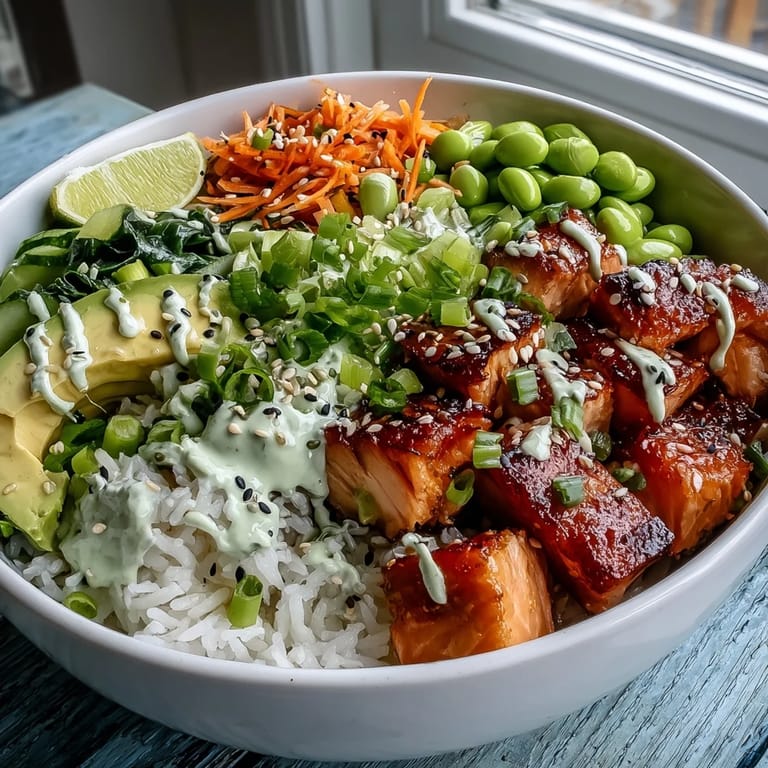
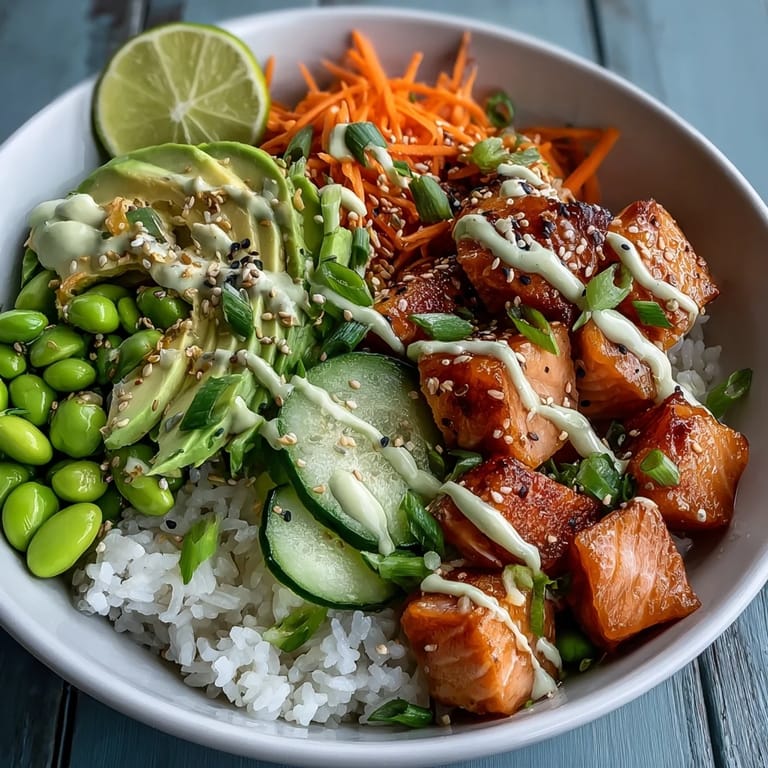
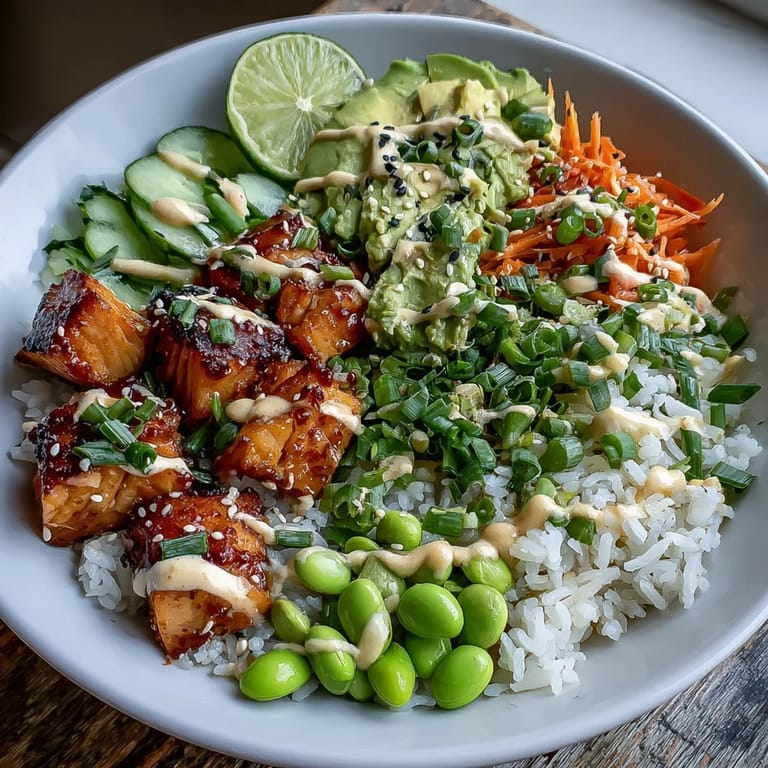
- Divide warm rice among four bowls, then arrange salmon, cucumber, carrots, edamame, avocado, and green onions on top in whatever pattern feels right. Drizzle your chosen sauce, sprinkle sesame seeds, add lime wedges, and serve immediately.
 Save
Save My mom tasted this one evening and asked if I'd finally learned how to cook properly, which might be the best compliment I've ever received. She's not easy to impress, but something about the way all these simple ingredients work together—not fighting each other, just supporting—made her understand why I keep making it.
The Marinade Magic
The marinade is smaller than you'd expect, but it's concentrated flavor meant to kiss the salmon, not drown it. Soy sauce brings salt and umami, sesame oil adds warmth, honey creates a glaze, and ginger plus garlic make it taste like you know what you're doing—this combination is impossible to overthink.
Why Broil Instead of Pan-Sear
Broiling keeps your hands and your stovetop cleaner than pan-searing, and it cooks the fish evenly without requiring you to fuss with it or worry about sticking. The heat comes from above, so the marinade caramelizes into a light crust while the inside stays moist and forgiving—it's hard to mess up, which is exactly what you want on a weeknight.
Building Your Bowl Your Way
This is where the recipe stops being prescriptive and becomes your canvas—some days you'll want extra avocado, other days you'll skip it. The rice and salmon are non-negotiable, but everything else is a suggestion, a starting point for whatever sounds good in that moment.
- Pickled radish or ginger adds brightness if your bowl feels heavy.
- Roasted nori or seaweed brings oceanic depth that pairs beautifully with the salmon.
- A squeeze of lime at the very end ties everything together and adds acidity that your palate needs.
 Save
Save This bowl has become my answer to 'what's for dinner?' because it's fast, it feels nourished, and it tastes like you actually care. Make it once, and you'll understand why.
Questions & Answers
- → Can I use frozen salmon cubes?
Yes, you can use frozen salmon. Thaw completely before marinating to ensure the flavors penetrate properly. Pat dry with paper towels to remove excess moisture before adding the marinade.
- → What other grains work well in this bowl?
Brown rice, quinoa, or cauliflower rice make excellent substitutions. Adjust cooking times accordingly—brown rice takes longer while quinoa cooks faster than jasmine rice.
- → How long does the marinated salmon keep?
Marinated salmon should be cooked within 2 hours of preparation. Once cooked, the salmon will keep in the refrigerator for up to 3 days when stored in an airtight container.
- → Can I make this bowl ahead for meal prep?
Absolutely. Cook the rice and salmon in advance, then store components separately in the refrigerator. Assemble bowls when ready to eat and add fresh toppings like avocado just before serving.
- → What vegetables can I substitute?
Try sliced bell peppers, shredded purple cabbage, steamed broccoli, snap peas, or roasted sweet potatoes. The bowl is highly adaptable to seasonal produce and personal preferences.
- → Is there a spicy alternative to sriracha mayo?
Gochujang mayo, spicy sesame dressing, or a drizzle of chili oil all provide excellent heat. You can also mix crushed red pepper flakes into soy sauce for a simpler spicy element.