 Save
Save There's something about assembling a Mediterranean bowl that feels less like cooking and more like painting with ingredients. My neighbor handed me a container of her homemade hummus one afternoon, and I suddenly understood why people get excited about these colorful, customizable plates—they're forgiving, adaptable, and somehow taste even better when you've had a hand in deciding what goes where.
I made this for my book club one spring evening when someone casually mentioned they were eating too much takeout. Within minutes of setting out the bowls, everyone was mixing and matching toppings, swapping olive preferences, and asking for the recipe—that's when I realized how much people crave food that tastes vibrant and feels like they're actually choosing their own adventure.
Ingredients
- Quinoa: Rinsing it removes bitterness and that chalky feeling, something I learned only after a few disappointing batches that tasted vaguely soapy.
- Zucchini: Medium-sized pieces roast more evenly than chunks, and they soften just enough to be tender without turning mushy.
- Red bell pepper: The sweetness balances the earthiness of the other vegetables, and chopping it into roughly the same size as the zucchini helps everything cook at the same rate.
- Red onion: Sliced thin enough to eat raw if needed, but roasting mellows its sharpness into something almost caramel-like.
- Cherry tomatoes: Halving them allows heat to concentrate their natural sweetness and prevents them from rolling around the baking sheet.
- Olive oil: Use what tastes good to you—cheaper oil works fine for roasting, but save something more flavorful for finishing if you want.
- Dried oregano and cumin: These two spices together create that unmistakable Mediterranean warmth without overpowering the fresh vegetables.
- Chickpeas: Warming them in a skillet with a pinch of salt makes them taste intentional rather than like something straight from a tin.
- Kalamata olives: Pitting them yourself takes five minutes but means you're not biting down on a pit when you least expect it.
- Hummus: Homemade is wonderful if you have time, but store-bought takes the pressure off and still tastes delicious.
- Greek yogurt: Tangy and creamy without being heavy, it acts like a sauce that ties everything together.
- Feta cheese: Crumbling it by hand rather than buying pre-crumbled keeps the pieces larger and more flavorful.
- Fresh parsley: The final green note that reminds you this came from actual plants, not just a formula.
Tired of Takeout? 🥡
Get 10 meals you can make faster than delivery arrives. Seriously.
One email. No spam. Unsubscribe anytime.
Instructions
- Heat your oven and prep the vegetables:
- Set the oven to 425°F and take a moment to chop everything roughly the same size so nothing finishes cooking before something else. This is meditative work—no rush.
- Season and roast:
- Toss the vegetables with olive oil, oregano, cumin, salt, and pepper, then spread them out on a baking sheet in a single layer. Roast for 20 to 25 minutes, stirring halfway through, until the edges catch color and everything smells irresistible.
- Cook the quinoa:
- While vegetables roast, combine rinsed quinoa and water in a saucepan, bring to a boil, then reduce heat and cover. Let it simmer for 15 minutes, then sit covered for another 5 minutes before fluffing with a fork—this steam time is what makes it light and fluffy rather than gummy.
- Warm the chickpeas:
- In a small skillet over medium heat, warm the drained chickpeas for 2 to 3 minutes with a pinch of salt. This small step makes them taste like part of the meal rather than an afterthought.
- Assemble your bowls:
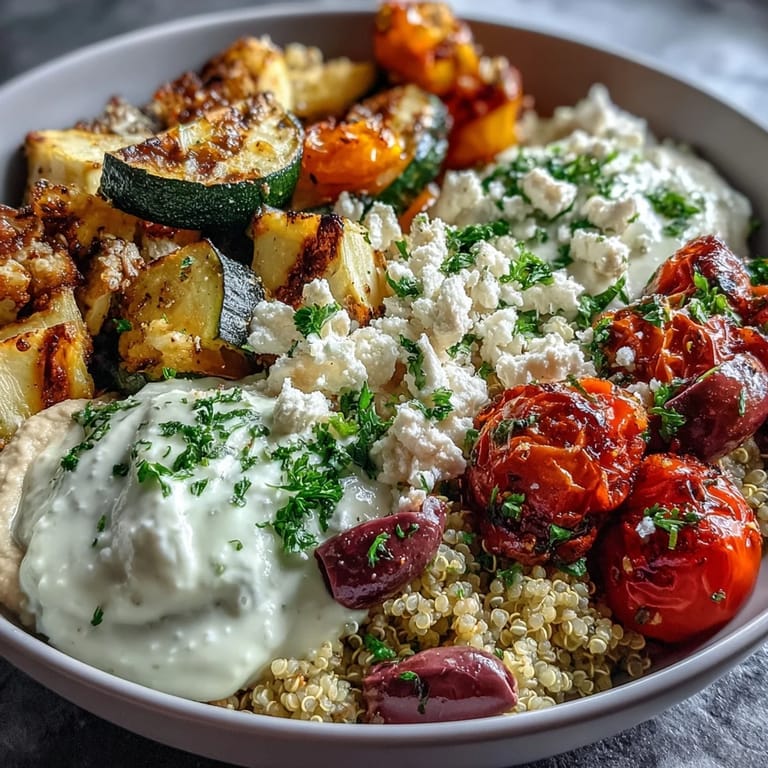
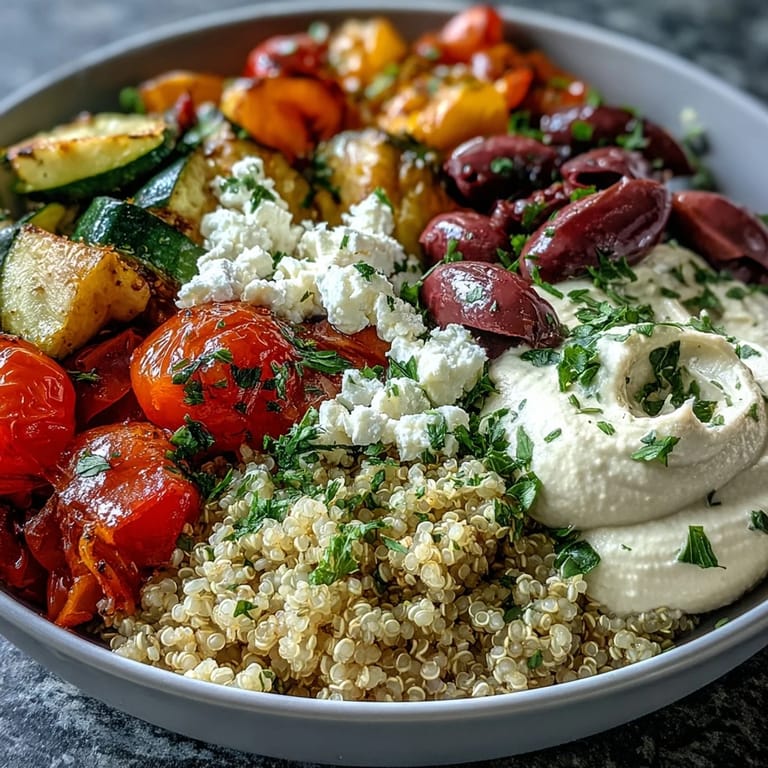
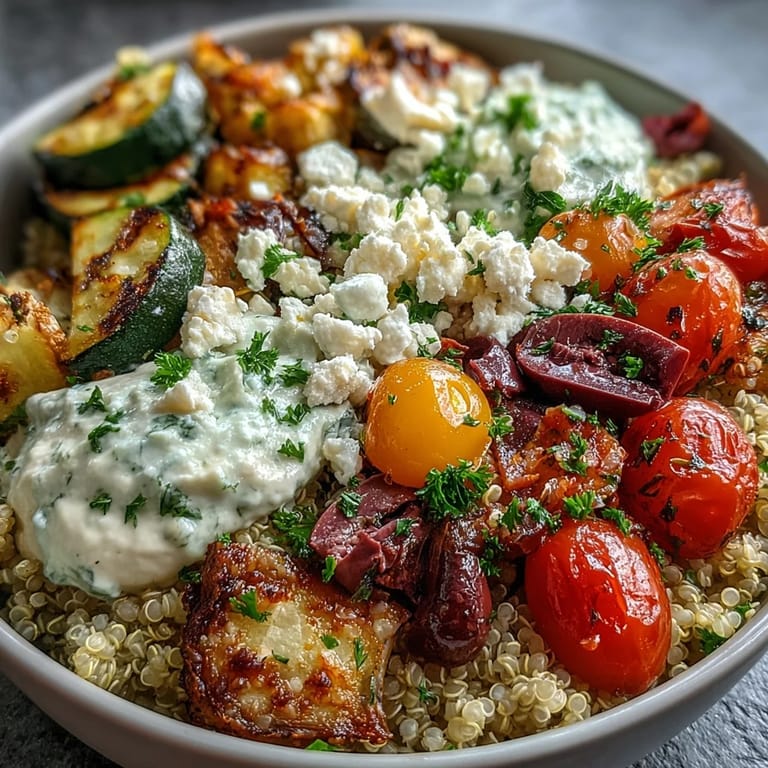
- Divide the fluffy quinoa among four bowls, then arrange the roasted vegetables, warm chickpeas, olives, a spoonful of hummus, a dollop of Greek yogurt, and feta cheese on top. Leave room for the parsley and don't worry if it looks imperfect—that's part of the charm.
- Finish and serve:
- Scatter fresh parsley over each bowl and set lemon wedges on the side so people can squeeze as much brightness as they want. Let everyone customize their ratio of toppings as they eat.
 Save
Save My partner's picky eater actually asked for seconds, which never happens, and I realized it was because he could see exactly what was in his bowl and skip anything suspicious. There's real power in food that lets people be in control of what they're eating.
Building Flavor Through Texture
What makes this bowl sing isn't just the individual ingredients but how they play against each other—creamy hummus softens the crunch of fresh parsley, warm roasted vegetables contrast with cool Greek yogurt, briny olives pop against everything else. Paying attention to these textural moments transforms the bowl from a collection of healthy things into something that actually excites your mouth.
Making It Your Own
The beauty of Buddha bowls is that they're a canvas rather than a rigid blueprint. I've made them with grilled chicken when I wanted more protein, swapped the chickpeas for white beans because that's what I had, and added cucumber slices when the tomatoes looked past their prime. The framework stays the same—grain, vegetables, protein, something creamy, something tangy—but the details can shift based on your mood and what's in your kitchen.
Storage and Meal Prep Strategy
I keep the components separate in the fridge and assemble bowls fresh each day, which means the vegetables stay crisp, the quinoa doesn't absorb all the moisture from the toppings, and you don't get bored eating the same combination twice. It's a little more work than mixing everything together, but you'll actually want to eat it.
- Quinoa keeps for up to five days refrigerated, and roasted vegetables last about the same if stored in an airtight container.
- Mix hummus and Greek yogurt together if you want a creamy base that distributes more easily than dollops.
- Add fresh parsley and lemon juice just before eating so they don't wilt or get soggy.
 Save
Save This bowl became my answer to the question of what to eat when you want something that feels both nourishing and indulgent. It's the kind of meal that tastes like you took time to care about yourself.
Questions & Answers
- → Can I make this bowl vegan?
Absolutely. Simply omit the feta cheese and substitute Greek yogurt with a plant-based alternative. The hummus provides plenty of creaminess, and you can add avocado slices for extra richness.
- → How long do leftovers keep?
Store components separately in airtight containers for up to 4 days. Keep roasted vegetables, quinoa, chickpeas, and toppings in separate containers. Assemble bowls when ready to serve for the best texture and flavor.
- → What other grains work well?
Farro, brown rice, bulgur, or couscous all make excellent substitutes for quinoa. Cooking times will vary slightly—farro takes about 25 minutes, while couscous needs only 5 minutes to prepare.
- → Can I grill the vegetables instead?
Grilling adds delicious smoky flavor. Cut vegetables into larger slices to prevent falling through grates, brush with olive oil, and grill over medium-high heat for 8-10 minutes per side until tender and charred.
- → What protein additions work well?
Grilled chicken, lemon-herb shrimp, or baked salmon make excellent additions. Simply prepare your protein separately and arrange on top of the bowl. For plant-based options, add extra chickpeas or toasted pine nuts.
- → Can I prepare components ahead?
Cook quinoa and roast vegetables up to 2 days in advance. Warm slightly before serving. Prepare chickpeas and wash vegetables ahead of time, but wait to assemble bowls until ready to eat for optimal freshness.