 Save
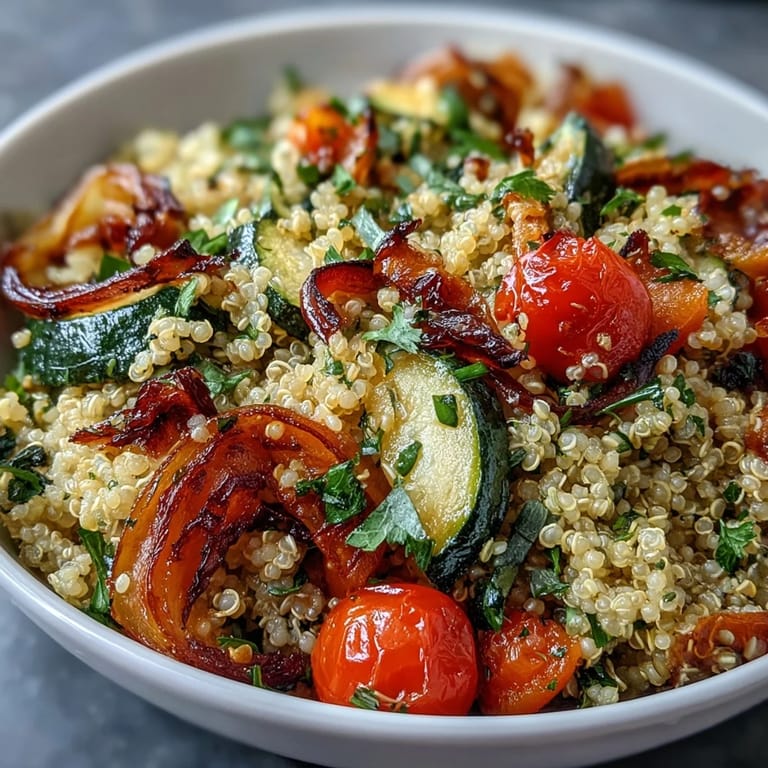
Save My kitchen smelled like toasted spices the afternoon a friend mentioned she'd gone vegetarian, and I realized I had no go-to dish that felt celebratory rather than apologetic. That's when I started playing with quinoa in a way I hadn't before, layering it with roasted vegetables that actually caramelized instead of steaming sadly on a plate. The moment I tossed it all together with fresh herbs and lemon, something clicked—it was vibrant, filling, and somehow tasted like I'd been cooking it forever.
I made this for a potluck where everyone brought the expected casseroles, and watching people go back for seconds of something naturally plant-based was quietly satisfying. One guest asked for the recipe right then, standing in the kitchen with a plate balanced on her palm, and I realized it wasn't the health factor at all—it was just genuinely delicious, which might be the most important thing.
Ingredients
- Quinoa, rinsed: This step matters more than you'd think because the saponin coating can taste slightly bitter; a quick rinse under cold water makes all the difference and takes thirty seconds.
- Vegetable broth or water: Broth adds quiet flavor without shouting, but water works just fine if that's what you have, and honestly the vegetables do most of the seasoning work anyway.
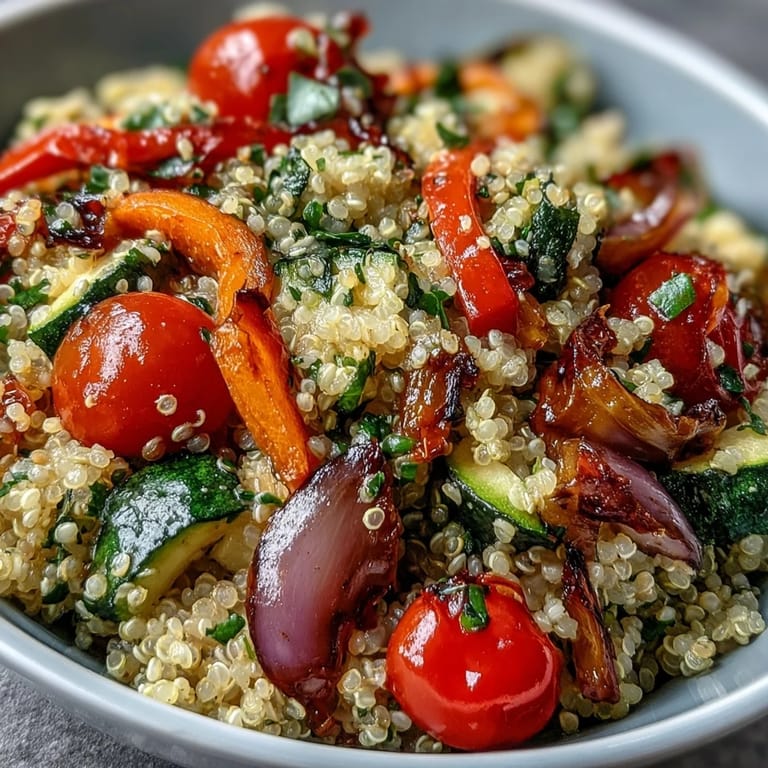
- Red bell pepper, zucchini, carrot, red onion: These particular vegetables roast at the same pace and develop sweet, caramelized edges when you don't overcrowd the pan, which is the actual secret.
- Cherry tomatoes: Halving them before roasting helps them collapse slightly and intensify, creating little pockets of jammy sweetness throughout the pilaf.
- Olive oil: Use enough that everything glistens but not so much that it feels heavy; this is where your intuition matters more than precision.
- Garlic, cumin, thyme, smoked paprika: The garlic gets toasted briefly in oil first, which mellows it and lets the other spices bloom without any harsh edges.
- Fresh parsley and mint: These aren't garnishes here—they're essential brightness that wakes up the whole dish right at the end, cutting through the earthiness of the roasted vegetables.
- Lemon juice: Don't skip this; it ties everything together and makes people wonder what the secret ingredient is without realizing it's just acid doing its job.
Tired of Takeout? 🥡
Get 10 meals you can make faster than delivery arrives. Seriously.
One email. No spam. Unsubscribe anytime.
Instructions
- Heat your oven and prep the vegetables:
- Set the oven to 425°F and while it's warming, dice your vegetables into roughly the same size so they cook evenly. This takes longer than you'd think to explain, but your hands learn the rhythm quickly.
- Roast until golden:
- Toss everything on a baking sheet with olive oil and seasoning, then roast for 20 to 25 minutes, giving it one good stir halfway through. You'll know it's ready when the edges look slightly caramelized and the kitchen smells incredible.
- Cook the quinoa simultaneously:
- Bring your broth to a boil in a medium saucepan, add rinsed quinoa, reduce heat to low, cover, and let it simmer for 15 minutes. When the liquid disappears and you see tiny spirals poking through, remove it from heat and let it steam covered for 5 minutes more.
- Bloom your spices:
- Heat a drizzle of oil in a large skillet over medium heat, add your minced garlic, and let it toast for about 30 seconds until it becomes fragrant. This brief moment prevents the spices from tasting raw or harsh.
- Build and combine:
- Stir the cumin, thyme, and smoked paprika into the garlic, then add your fluffed quinoa and roasted vegetables, tossing gently so nothing breaks apart. Warm it through for a minute or two, just enough to marry the flavors.
- Finish with brightness:
- Remove from heat and add your fresh herbs along with lemon juice, tossing everything one final time. Taste and adjust salt and pepper because you're the best judge of what your version needs.
 Save
Save There's a moment in any good recipe when it stops being instructions and becomes muscle memory, when you stop measuring and start tasting. This pilaf reached that point for me quickly, and now I make it without really thinking, which means I make it more often, which means I eat better without trying.
Why This Works as Both Main and Side
The beauty of quinoa pilaf is its flexibility—it's substantial enough to stand alone with nothing but a glass of water beside it, but it's also humble enough to play second fiddle to grilled fish or roasted chicken without feeling overlooked. I've served it both ways countless times, and it behaves gracefully in either role, which is rare and worth noting.
The Roasting Method Makes All the Difference
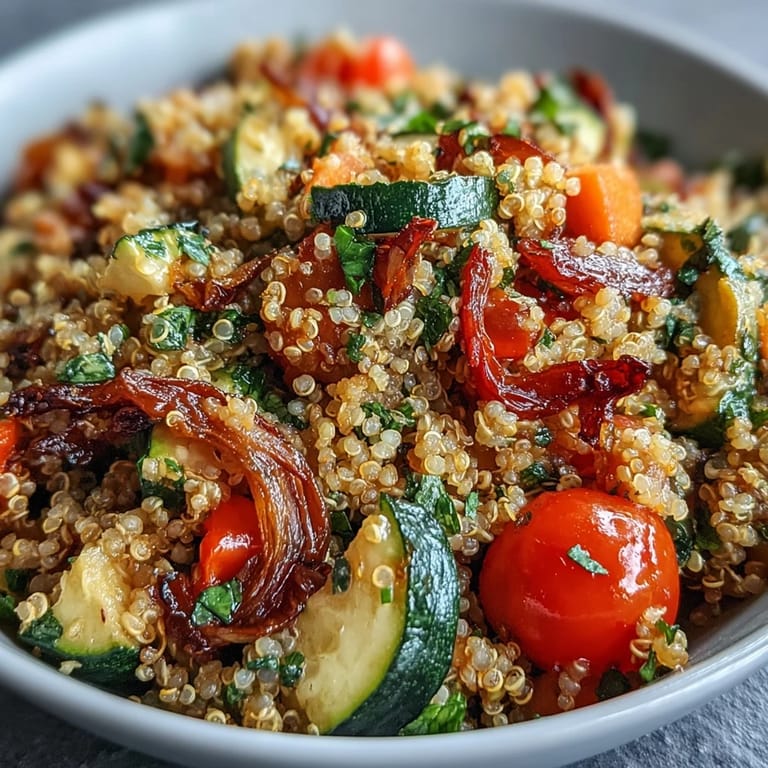
Too many vegetable pilafs steam everything together, which results in soft, samey textures and muted flavors. By roasting the vegetables separately first, you get caramelization and depth that transforms this from healthy-eating obligation into actual food worth craving. The high heat concentrates the natural sugars and creates little crispy edges that add contrast and interest in every bite.
Customizing Without Losing Balance
The formula here is solid, which means you can play within it without breaking anything. I've swapped zucchini for eggplant in late summer, added roasted sweet potato chunks in fall, and thrown in broccoli florets when that's what needed using up. The key is respecting the cooking times—smaller pieces roast faster, larger ones need more time, and uneven sizes mean some bits burn while others stay pale.
- Seasonal vegetables work beautifully here as long as you cut them to roughly the same size for even cooking.
- Adding chickpeas or white beans turns this into a more protein-dense main if you're not eating it alongside something else.
- A handful of crumbled feta at the end (if you eat dairy) adds salty richness that feels indulgent but only adds a few ingredients.
 Save
Save This pilaf became one of those recipes I return to again and again because it's nourishing without feeling like a compromise, colorful without being precious, and friendly enough to serve to anyone at your table. That's all you really need from a good dinner.
Questions & Answers
- → Can I use other vegetables in this pilaf?
Absolutely. Swap in any seasonal vegetables you have on hand such as squash, eggplant, broccoli, or sweet potatoes. The roasting method works beautifully with most vegetables.
- → How do I store leftovers?
Store in an airtight container in the refrigerator for up to 4 days. This pilaf tastes delicious served cold or gently reheated. The flavors often develop even more after sitting.
- → Can I make this dish protein-rich?
Yes. Add a can of drained chickpeas during the final toss, or top with crumbled feta cheese if not vegan. You can also serve alongside grilled chicken or fish for extra protein.
- → Do I need to rinse quinoa before cooking?
Yes. Rinse quinoa thoroughly under cold water before cooking to remove saponins, which can cause a bitter taste. Use a fine-mesh strainer for best results.
- → Can I cook the quinoa in advance?
Certainly. Cook the quinoa up to 2 days ahead and store it refrigerated. Roast the vegetables fresh, then combine everything when ready to serve.